
Residential development in Prague have to make peace with the city’s brutal mathematics before starting any projects. . The numbers are straightforward: land costs have tripled since 2014, permitting takes years instead of months, and there’s a narrowing pool of buyers able to pay for new product in the city. GARTAL’s response in the Prague’s Chodov district is to build upward within each unit rather than outward across shrinking plots.
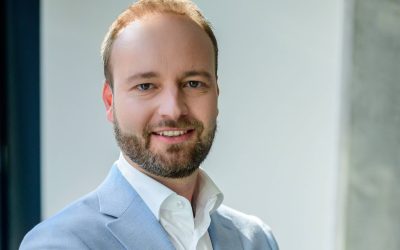
 Its project City Lofts will offer two-level units with living areas below and bedrooms accessed by internal staircases in a tightly-designed new build structure. A typical 2KK unit spans 43 sqm across both levels, coming in at CZK 7.5 million. Co-owner Rostislav Petcenko says over 40% of the units have sold despite construction having commenced only this year, with completion targeted for 2027. Prices continue climbing as upper floors come to market.
The project embodies GARTAL’s philosophy that puts efficient layouts on top of the priority pyramid. “Five additional square meters costs 750,000 CZK,” says Petcenko. “We optimize layouts so buyers aren’t paying for unusable corridor space or awkward corners.” It’s a pragmatic stance in a market he claims is dominated by investors, rather than owner-occupiers.
Such buyers calculate rental yields, rather than imagining Sunday mornings in the kitchen.
BUILDING THROUGH CYCLES
As a developer, GARTAL’s trajectory mirrors broader shifts in Czech real estate over two turbulent decades. The company was founded in 2002 as a developer, launching its own real estate agency in 2007. Initially, it targeted on clients from Ukraine, Russia, and Kazakhstan seeking to invest their capital in stable Western assets. As the 2008 financial crisis froze local sales, GARTAL’s Eastern European client base kept projects moving when domestic buyers vanished.
That early success came with painful lessons. GARTAL’s first large development in Újezd nad Lesy when its contractor ran into difficulties. Petcenko recalls how he was forced to complete the project on his own at a time when the market had dropped 15%. While the project ultimately turned a profit, Petcenko spent the next few years focusing on agency business and property management for foreign investors.
 The firm re-entered development around 2014. This started with apartment building acquisitions and renovations before moving to ground-up construction. A pivotal decision came around 2017 when Petcenko responded to the difficulty in finding reliable general contractors by setting up an in-house construction division. GARTAL Stavební now employs roughly 40 people and operates as an independent unit. Around 90% of its work this year is for other investors.
THE METROPOLITAN SCALE GAME
GARTAL’s ambitions have escalated sharply since 2023 when Martin Svoboda (formerly with JRD) assumed leadership of the development division. The firm currently delivers 150-200 units annually but aims to reach 500 units per year before 2030. Petcenko seeks to place his company among Prague’s five largest residential developers. GARTAL has secured land for 2,000 units and is negotiating for an additional 1,000, all with existing zoning rights that eliminate the need for land-use changes.
It’s a strategy based on the assumption of continued undersupply. The inability of Czech lawmakers to streamline the construction approval process means demand continues to outpace new inventory. Petcenko sees prices north of CZK 200,000 as inevitable, especially since land remains scare and higher interest rate costs compound the cost of slow approvals.
For City Lofts, GARTAL will deploy the sort of hi-tech kit you’d expect more in commercial projects: license-plate recognition for garage entry, mobile-phone building access, and app-based visitor codes. “We don’t sell square meters,” says Petcenko. “We sell apartments in projects that are alive, and hopefully bring people some happiness.”
The project’s design has been raising eyebrows. In the context of Prague 11, where rows upon rows of panelak buildings house tens of thousands of people, City Loft’s architecture doesn’t exactly fit in. Why not? “We could do just a normal apartment building there that would fit in and that no one would notice,” says Petcenko. “But if you have the opportunity, why not do something pretty?”
Beyond City Loft, GARTAL recently completed projects in Českobrodská (92 units), Kubánské náměstí (over 100 units) and Tuchoměřice (50 units), with smaller developments underway in Kolovraty. A major project in Horní Počernice will eventually deliver over 1,200 apartments alongside single-family homes—though those homes will sit on compact lots reflecting market realities. Land parcels under 30 million CZK have effectively disappeared from Prague’s immediate periphery, pushing family-home buyers toward either smaller plots or longer commutes.
Also in ThePrime
Marketa Vrbasová (Knight Frank): Auto Suppliers Face Indirect Hit from Trade Wars
Michal Bilý (108 Real Estate): Q2 new industrial leases strengthen