
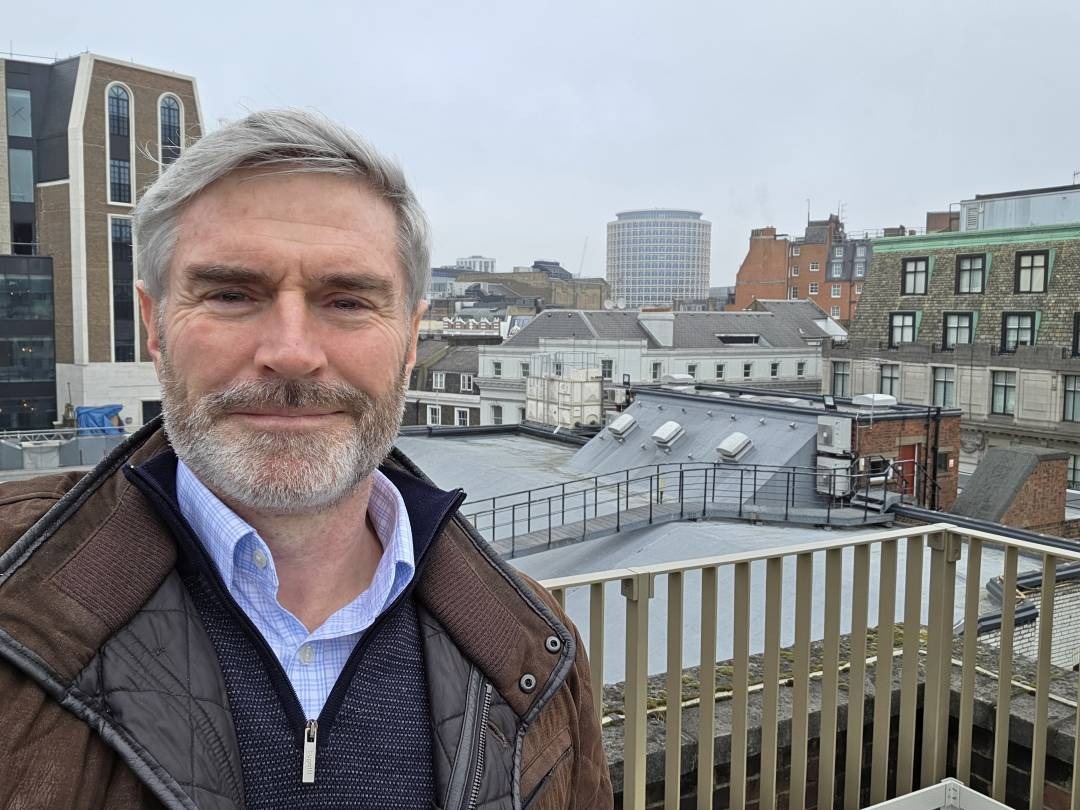
What’s changed for you and the Hungarian property sector since the elections that brought down the last governmnet?
I was contacted by a number of people I’ve known from the past, and they’ve all indicated an interest to look at Hungary again. That’s good from my vantage point, because it hasn’t always been easy to show the value-add potential of Hungary. I’m enjoying this new wave sensation.
Also, because there’s a clean-out of the last regime, for lack of a better word, you see a more level playing field now with service providers. That’s the case in real estate but in many other industries as well. I think this will bring in a lot of new energy, new ideas, and creativity.
Can you give me an example of what you mean?
There’s a site in the middle of Budapest called Rakos Rendezopályaudvar, which is a huge, derelict railway station in the middle of Budapest of some 244 hectares. The Hungarian state did a deal with the Emirati development group Eagle Hills in recent years, that people dubbed “Mini Dubai”.
The approach to that project has changed dramatically because Budapest City exercised its preemption right and stepped into the contract. Budapest organized an international architectural competition for the site that’s attracted quite a number of firms. I’ve met some of them now and they’re all very international but combined with local firms. What’s so exciting is that suddenly they can get involved in the project, whereas in the past it would have been a closed shop.
In terms of the interest from foreign capital, how much do you think Hungary has actually missed out on? There aren’t many these days in the Czech Republic or Slovakia either, but that’s a relatively new situation.
The Hungarian market has struggled for a number of years for international capital. In general, there were some very low years of investment. The war in Ukraine, inflation, energy prices, but it’s the high interest rates that have been the biggest issue because that just knocked out a lot of the market.
I think Hungary was fortunate in that domestic investors stepped up, whether it was the likes of Erste Bank open fund or OTP Banks fund or whether they were investors linked to the NER network (NER= System of National Cooperation — an ecosystem of domestic business elites and investment funds closely tied to the Fidesz party). In some ways, while you might question transparency, a number of legacy projects were picked up, finished, and completed. There were some terrible examples of properties left in disrepair that were then developed and have become functioning assets — hotels, for example. But yes, we’ve had the retreat of the Austrians and German investors. English money disappeared a long time ago, but that’s not an uncommon phenomenon as we know, investors come and go for many reasons, not just political.
The lack of transparency was one of the primary complaints of the new government and how they built support. Is there going to be a reckoning now on the property markets? Can it ever all be unravelled?
The new government has set up this policy of fiscal transparency and anti-corruption reforms. But the verdict’s out on how impactful that will be. Because everything was done on a “legal basis” in Hungary. You could argue there’s nothing to “unravel”.
On the one hand, you could question how some of these people became incredibly successful so quickly. A good example is the Gellert Hotel, part of a portfolio that had been owned by an English group. They made very few investments and let the property fall into a sorry state. Evenutally the hotel ended up in the possession of a group linked to a relative of Orban. On the other hand, scaffolding is up there and work is underway to refurbish it as a Mandarin Oriental. That’s a great use for an iconic, landmark hotel and it’s an improvement over what was there. It’s a huge issue.
Where are the opportunities today? Projects that have lain dormant for years? Existing properties where owners are suddenly looking for an exit?
There’s capital rotation underway. If someone owned a property and bought it 15 years ago, there’s a better chance of exiting today than there would have been a year ago.
I think the level of liquidity will increase. Personally, I don’t think pricing is going to change much — there might be more stock on the market, which could bring it down a bit. But in general, liquidity will increase.
Development will increase, especially in retail. We had legislation that banned retail plazas, but as I understand it, this is going to be watered down or repealed.
Also, Budapest is quite a strong target market for hospitality, as it has far fewer rooms than Prague, for example. And the tourist numbers are growing. Budapest has been bubbling away all these years and is actually working quite well. It’s just that these elections have given it all a bit of a shot in the arm.
Hasn’t there been a Budapest discount for years now? Yields for commercial property have always been a bit higher.
They’ve been higher, which was linked to the so-called country risk, and because banking debt was more expensive. There’s also a bit of historical context, because Budapest’s office sector tended to have high vacancy — we had 25% vacancy at one stage. But I think if things remain equal and the new government creates stability and is seen to be hitting the right path, you could see yields converge back down towards Prague levels.
How about your business? Are you seeing a new impetus now? More investors interested in getting into the city?
We do project and asset management, along with investment advisory, which has been my role. We’ve been working with Hungarian capital going out of Hungary for some time, thanks to which I’ve expanded my geography to other parts of Europe. That includes doing business in London, where there’s basically no Hungarian equity. By contrast, there’s a growing Czech present there (London), which is great to see. But while we’ve been trying to insulate ourselves by working abroad, it’s nice today to be able to dust off the old files on Budapest properties and help clients with them.
Have prices already risen because of the elections?
Right after the election weekend, I think owners probably added 10% to their asking price. It’s definitely firmed the resolve of owners.
Also in ThePrime
Rita Šafránková & Jiří Vančura (Trinity Bank): We’re targeting CZK 65bn
Tomáš Kadeřábek (Assoc. of Developers): A giant leap for planning!
Miroslav Barnas (ARETE): C. European logistics still the best yield opportunity