
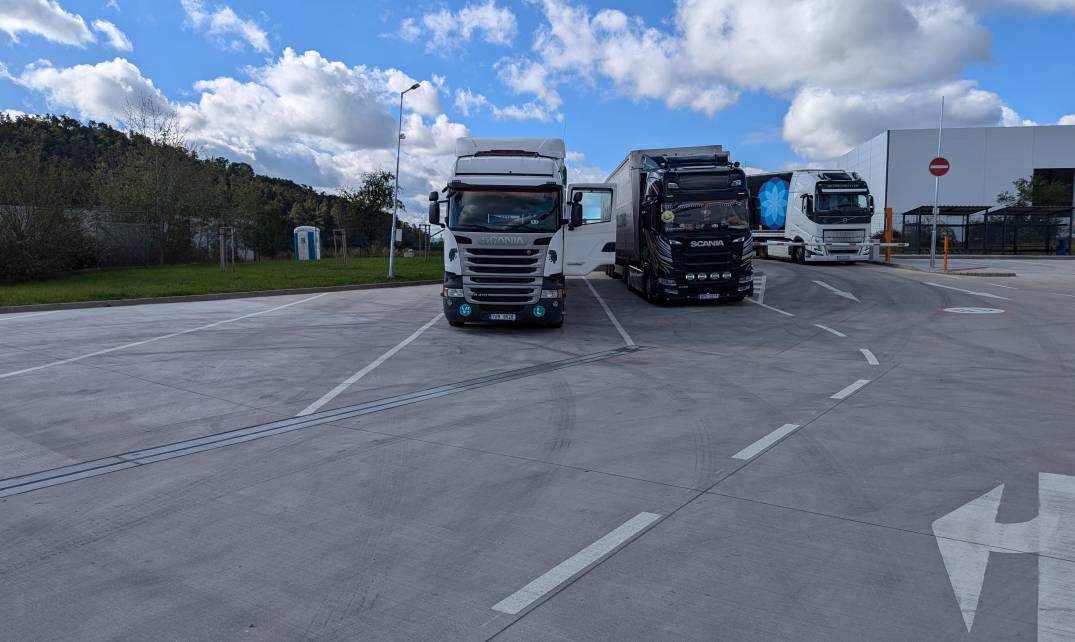
DHL CEO Ludek Drnec called the 1 July launch of the EU’s EUR 3 per-item customs duty “D-Day” for Chinese marketplaces. Czechia illustrates why: the country processed 106 million low-value shipments in the first half of 2026 alone, already surpassing the full-year 2025 total of 105 million, up from just 2.3 million in 2023. That flood — 91% of it from China — previously bypassed European warehousing entirely. Now it has to find a new route. And that’s good news for industrial landlords.
Czech customs deputy director Jiri Trousil confirmed the pivot is already underway. Ad valorem duty on bulk imports cleared as standard commercial shipments works out far cheaper than the new per-item levy in most product categories. “That is one of the reasons why large e-commerce companies will shift to importing goods in bulk,” he said. Czech customs has not yet seen warehouse plans in the country specifically, but platforms are already operational in Spain, Ireland, and Poland — and Eastern Europe, including the Czech Republic, ranks among the fastest-growing regions for local fulfilment expansion.
The scale of warehouse investment is striking. Shein opened a 740,000 sqm logistics hub near Wroclaw last December, part of a €250 million European infrastructure commitment over five years. Temu intends to fulfill 80% of European orders via local warehouses by year-end, operating 10 self-run EU facilities across Germany, France, Spain, the Netherlands, and Italy. The online giant has already cut air freight to 35% of EU-bound volume, shifting to sea and rail for an estimated 40 to 60% reduction in per-item logistics costs. That model requires large receiving warehouses at port and rail hubs, which you’d think is in the wheelhouse of CEE’s stock of industrial parks.
A further EU-wide customs handling fee — expected at around EUR 2 per declaration line — arrives in November, stacking on top of the July duty. For industrial landlords, this is a structural demand driver that did not exist two years ago: platforms that needed zero European storage now need fulfilment centres close to consumer markets, at scale, and fast.
Also in ThePrime
Pavel Velebil (Tide Reality) describes the 4 types of investment flat buyers