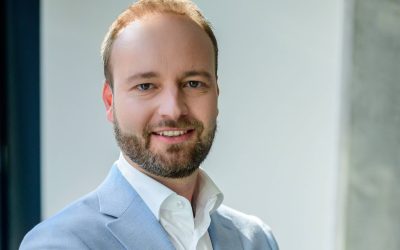

Josef Wiedermann says the Austrian developer is betting on timber construction to navigate rising costs, while actively hunting for new permit-ready acquisitions in Prague
UBM Development has pivoted decisively away from hotel and office projects in Prague, concentrating its entire Czech operation on residential development. It’s a strategic shift driven less by ideology and more by cold arithmetic—offices simply don’t pencil out anymore in the current market, according to Josef Wiedermann, head of UBM’s Czech operations.
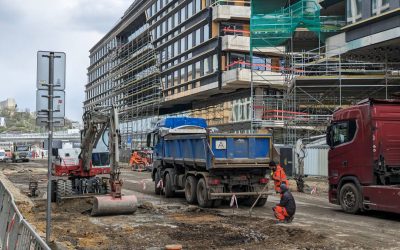
UBM’s recent track record tells the story of this transition. Following the successful sale of the final unit at Neugraf on Smíchov, a 50-50 joint venture with Crestyl, and the completion of the 138-apartment units Astrid Garden, UBM is now pushing forward with Rezidence Na Plzeňce. It’s a 160-apartment units development in Smíchov the construction of which has already begun. The project’s performance validates the residential strategy. Having launched in January the moment the building permit came through, Wiedermann’s already secured over 50% pre-sales.
Meanwhile, the company is wrapping up sales at Arcus City in Stodůlky. This is a three-phase, 278-unit project notable for featuring Prague’s first multi-story timber residential buildings. Only 6 apartment units remain from the total inventory, proof that rising prices haven’t cooled buyer appetite.
Rather than slowing down, Wiedermann says he’s actively pursuing new acquisitions, particularly in Prague 4, seeking permit-ready residential projects that can move quickly to market.
The shift toward timber construction represents more than environmental posturing—it’s a pragmatic response to a quietly growing labor crisis. “Finding someone young enough to work on a construction site who can actually do the work is essentially a superhuman task,” Wiedermann says. The problem remains even for employers offering competitive wages.
This labor shortage isn’t improving. Construction crews increasingly comprise workers from Ukraine and even more distant countries, creating language barriers that risk having an impact on quality. What happens once the war in Ukraine ends is anyone’s guess. Wiedermann warns that once these workers return home, the construction sector faces potential paralysis.
Timber construction offers a partial solution by shifting work into controlled factory environments, reducing on-site labor requirements. Following regulatory changes this summer that now permit hybrid construction up to 22.5 meters without special exemptions—roughly seven stories—timber has become commercially viable for Prague’s market. UBM’s next project will leverage these new parameters.
Developer margins have held remarkably steady. “We still work with roughly the same margin, which is somewhere around 15-20%,” Wiedermann explains, reflecting the risk profile of residential development. What’s changed is everything underneath: land acquisition costs, protracted permitting processes, construction expenses, and dramatically higher capital costs.
The math is unforgiving. Buy a plot at today’s elevated prices, spend several years navigating permits while servicing debt at current rates, now far higher than the 3% of not so long ago. These aren’t temporary dislocations—they’re structural shifts that make meaningful price corrections unlikely.
The market is also evolving compositionally. Where one-bedroom units once dominated small apartment projects, two-bedroom layouts are gaining share. Wiedermann says that with rental rates climbing, two income-earning tenants can better support lease payments, making these units more attractive to investors without proportionally higher costs.
UBM’s willingness to pursue new acquisitions while construction costs remain elevated and labor scarce signals a longer view: they’re betting these conditions persist.
Also in ThePrime
Pavel Sovička (Panattoni): Productivity is the problem. Not developers
Marketa Vrbasová (Knight Frank): Auto Suppliers Face Indirect Hit from Trade Wars